Before you start
Match your chip to the dmg on GitHub Releases. Upstream notes CI-built dmgs are not yet verified on real Mac hardware, so treat first launch carefully. UNVERIFIED on a real Mac in this research pass.
Install steps
- Download
OpenResume-Builder-*-arm64.dmgor*-x64.dmg. - Open the dmg and drag the app to Applications (or follow the dmg’s shown layout).
- Right-click the app → Open to clear Gatekeeper once.
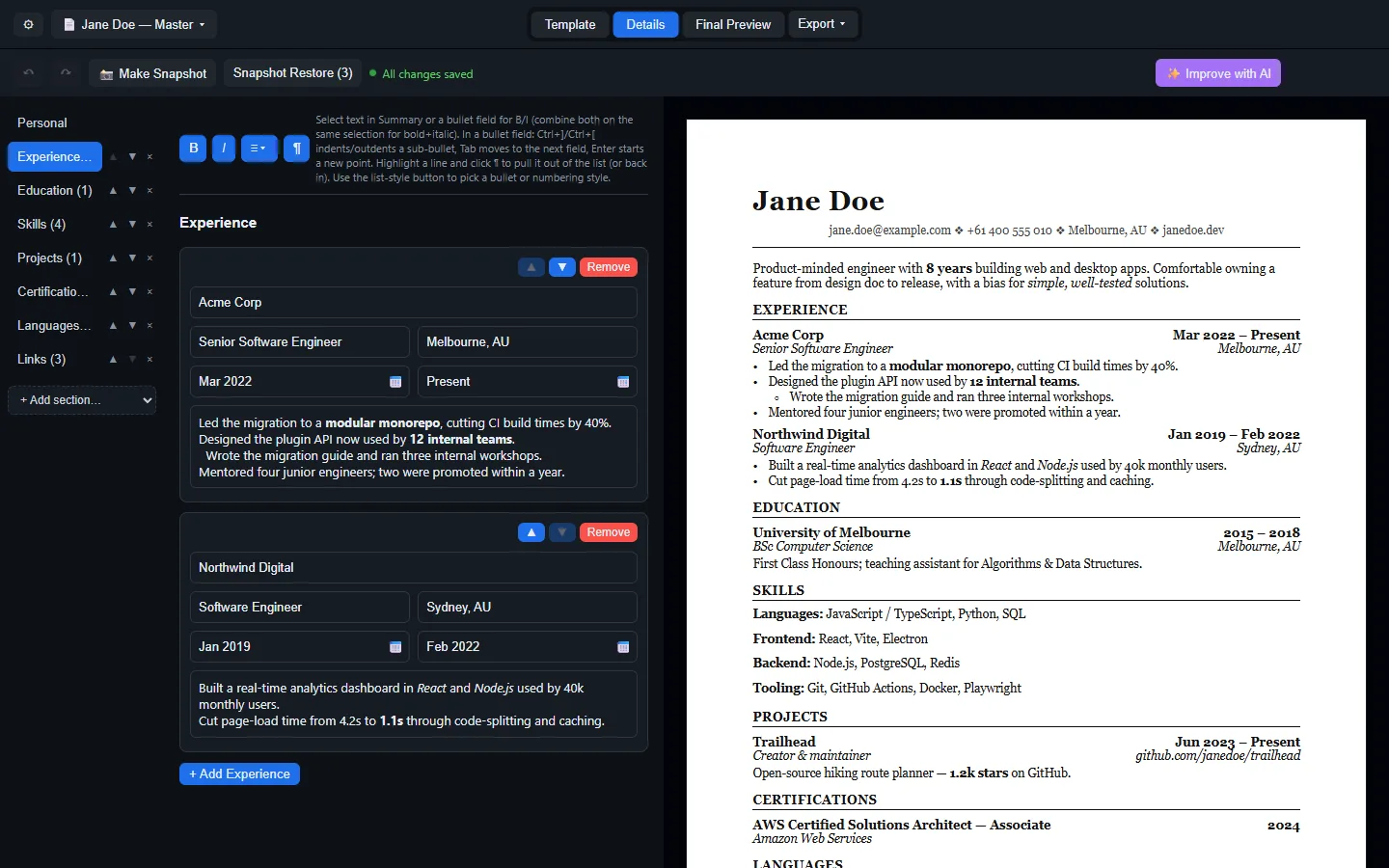
- Create a New document profile and confirm autosave.
Brew status
Homebrew cask search found nothing for this project. Do not paste a remembered brew install --cask line. Prefer the dmg door only.
Prove the document path
Export PDF and plain text. Save JSON. Checklist: /installed. Safety: /is-resume-builder-safe.
Updates
Return to Releases for the next dmg. Optional in-app update checks still depend on GitHub Releases. Uninstall by removing the app from Applications (UNVERIFIED detail).
Common macOS mistakes
Double-clicking without right-click Open, inventing a brew cask, and downloading a dmg from a mirror that is not github.com.
Related: for this computer, download safely, Windows install.
Lab note
Document which chip each loaner Mac uses. Mixing arm64 and x64 dmgs on the wrong hardware wastes a document workshop hour.
Why a local desktop client helps
A local desktop builder keeps drafts on disk you control. You are not waiting on a design login to fix a typo before a midnight deadline. OpenResume Builder adds profiles, snapshots, and PDF plus plain-text export so the same content can feed both human readers and ATS portals.
Desk checklist after install
Write the download URL, the filename, and the JSON backup folder on a sticky note or inventory card. Prove one PDF PDF export before you invite classmates or coworkers to use the same machine image. Keep Canva or Word only as reference surfaces once the local profile works.
What this guide will not invent
No Homebrew cask, snap, or Flatpak id was found for this project on the review date. Commands we could not run on real hardware stay marked UNVERIFIED in research. Prefer GitHub Releases filenames you can see with your own eyes.
Related reading
- Home overview
- Releases file map
- GitHub project map
- Download safely
- For this computer
- Installed checklist
- Switch from Canva
- vs Word
Hiring-season rhythm
During busy application weeks, duplicate a known-good document profile instead of editing the master for every employer. Export PDF for humans and plain text for portals that strip design. Take a snapshot before risky rewrites so you can restore yesterday’s version without digging through email drafts.
Integrity habits
Refuse Setup files delivered over chat without a Releases URL. Refuse “update helpers” that are not winget or the official Releases list. Refuse brew commands copied from unrelated apps. Integrity is mostly boredom: same door, same proof export, same backup folder.
Extended practice block
Treat every PDF export like a release: date it, store it, and keep the JSON source beside it. When a recruiter asks for a small wording change, duplicate the profile first so the master profile stays clean. When a portal eats your PDF, submit the plain-text twin from the same day instead of redesigning under panic.
Career centers should keep a laminated card with the Releases URL, the winget id, and the note that brew was not found. Students then stop inventing package commands during workshops. Helpdesk volunteers should ask for the filename before they ask for screenshots of error dialogs.
If you maintain lab images, re-check the live Releases list whenever you refresh the semester image. Asset names can gain portable builds or drop architectures. Update the printed handout the same day you update the image. Paths marked UNVERIFIED in research should be tested on staff hardware before you promise them to a full classroom.
Travel weeks benefit from Portable Windows exe plus a cloud folder that only syncs JSON backups, not random Setup downloads from search. Home desktops benefit from Setup plus winget for cleaner uninstalls. Linux desks benefit from a single AppImage path with chmod documented in the home README.
Finally, remember the category word: you came here for a application workflow you can install and trust. OpenResume Builder is the MIT client mapped by this guide. Canva, Word, Docs, and LinkedIn remain useful neighbors, not alternate download portals for this binary.
Frequently asked questions
Which dmg do I need?
Apple Silicon Macs should take OpenResume-Builder-*-arm64.dmg from the current stable tag. Intel Macs should take the matching x64 dmg on the same Releases list. Match the chip before you clear Gatekeeper so you do not install the wrong architecture by accident.
Is there a brew cask?
No Homebrew cask was found on formulae.brew.sh for this project on the review date. Do not invent a brew install --cask line from memory. Prefer the official arm64 or x64 dmg from GitHub Releases and document that door on the machine ticket.
Why does macOS block the app?
Builds are unsigned and not notarized according to the project wiki, so macOS Gatekeeper may block a normal double-click. After you confirm the Releases URL, right-click the app and choose Open once. Treat that prompt as a trust checkpoint, not a reason to download a mirror.